
Packaging, a strategic lever of the circular economy?
Packaging, often reduced to its simple protective role, is now emerging as a key player in the ecological transition of the construction sector. By meeting technical constraints, regulatory pressure and customer expectations, packaging is reinventing itself to become the missing link in a truly circular economy.
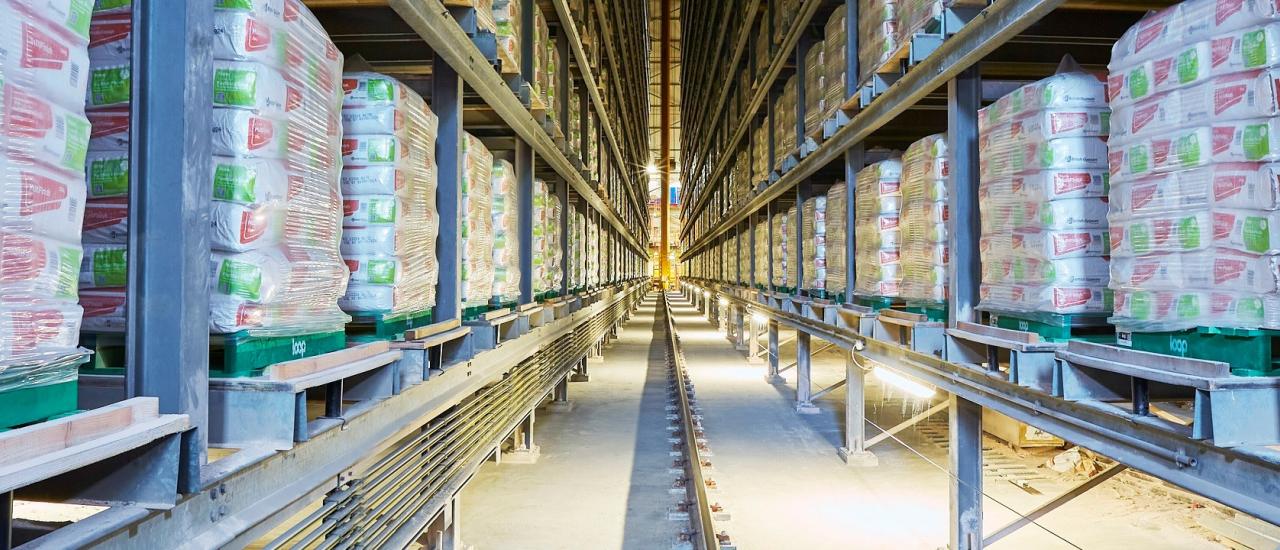
Generally seen as mere packing material, packaging plays a crucial role in many areas. In protecting materials, as part of a marketing strategy and above all an environmental approach, it now represents a major strategic lever, but one that is still underestimated. So how can this constraint be turned into an opportunity for more sustainable construction?
From protection to visibility: when packaging becomes a strategic factor
The primary function of packaging in the construction sector is protection. Whether on construction sites or in warehouses, it has to withstand particularly demanding conditions. “The protection of our materials demands very specific technical characteristics,” explains Philippe Laurant, Group Packaging Purchasing Manager at Saint-Gobain. “The packaging has to stand up to intensive handling, outdoor storage and bad weather. This combination of constraints calls for tailor-made solutions.”
Here, innovation is the solution. Take mortar bags, for example. Traditionally, the packaging has two layers, with paper and plastic, which hinders recyclability because of the difficulty of separating the two materials. To remedy this, the Saint-Gobain Brazil teams have come up with a single-layer bag that is more easily recyclable while remaining completely resistant to humidity. The Sekurit plants in China have succeeded in transforming their plastic waste into protective parts for transporting windshields.
But technical requirements are only part of the challenge. Packaging is an essential component of a globally consistent brand image. “For construction materials, packaging is an essential vector of recognition and trust. It’s the first thing customers see,” says Philippe Laurant. It is a reflection of all the Group’s sustainability efforts. Hence the need to be exemplary!
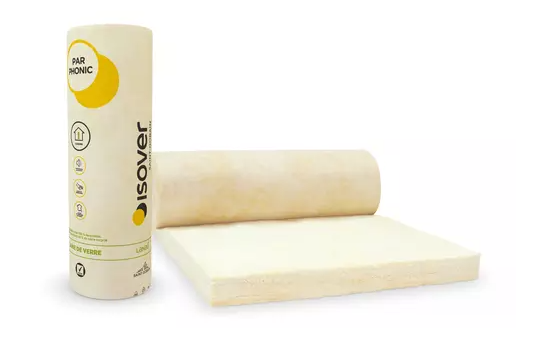
For example, Isover has chosen to switch to recyclable white film – abandoning the characteristic yellow color – which required meticulous design work to maintain the brand’s visual identity while limiting the print area to a maximum of 15%. Another example is Norton, a specialist in abrasive solutions: in China, the company has abandoned its traditional blue and white boxes in favor of brown packaging made from 100% recycled materials, with direct printing of logos on the cardboard to limit the use of ink and chemicals. The brand has even gone so far as to replace printed plastic adhesive tape with plain paper tape.
A necessary transition to more sustainable packaging
But what happens to this packaging once the solutions have been unpacked? On building sites, packaging waste management remains a major challenge: often poorly sorted, sometimes even incinerated, they represent a considerable volume whose environmental impact can no longer be ignored.
Against this background, Europe is leading the way with the new Packaging and Packaging Waste Regulation (PPWR), which sets ambitious targets: at least 35% recycled content in plastic packaging and 40% of transport packaging to be reusable by 2030. To support and accelerate this transformation, digitization will be crucial, particularly with the arrival of mandatory QR codes by 2030. Their purpose is to improve the traceability of packaging throughout its life cycle. While Europe is a pioneer in this area, the movement is gradually spreading to other regions. In the United States, five or six states already control the implementation of Extended Producer Responsibility (EPR). In Asia, too, several countries are tightening their regulations, particularly on the use of plastic.
These regulatory changes are driving innovation throughout the sector. At Saint-Gobain, for example, which has set itself the target of 100% recyclable packaging, containing at least 30% recycled or bio-sourced material by 2030, the packaging revolution is under way.
The results are already visible in the field: in the UK, for example, where the Pallet LOOP program encourages the reuse of pallets. This initiative should enable British Gypsum to reduce its CO2 emissions by 2,000 tonnes by 2030. In Spain, Weber has chosen to promote the reuse of its buckets. The market is also seeing the growing use of silos for “bulk” distribution and pump trucks that can deliver mortar directly to building sites. These solutions quite simply eliminate the need for individual packaging.
Circularity: Why can't we recycle buildings as well?
Re-inventing packaging through eco-design
Beyond packaging circularity and recyclability, there is also work to be done on eco-design, with the aim of optimizing existing packaging. Compressing insulation rolls using the primary packaging, for example, makes better use of truck space. In the same vein, consideration is being given to a switch from round to square buckets.
Another example from the United States, where traditional plastic buckets are being replaced by bag-in-box cubitainers. This more environmentally friendly system combines lightweight plastic film with a predominantly bio-sourced cardboard box. ADFORS, a specialist in technical textiles, has also taken a step forward by doing away with the cardboard tubes in the center of its rolls of fiberglass reinforcement mesh. A seemingly simple change, but one with multiple impacts: significant reductions in CO2 emissions, savings on cardboard, lighter products for transport and optimized storage space. This innovation even improves the user experience, as the rolls can now be used right down to the last centimeter, whereas previously the often-twisted parts close to the tube ended up as waste.
Innovation: the discreet charm of continuous improvment
The transformation of packaging is an opportunity to re-invent construction. Solutions already exist, from the incorporation of recycled materials to reuse systems, but challenges remain: developing plastic collection channels, overcoming technical barriers, adapting production lines, and so on. Not forgetting the cultural barriers: changing habits takes time and education.