
What can industry do to address the water crisis?
Water scarcity raises fundamental questions for industry. How can business continuity be ensured in a context of increasing water stress? Saint-Gobain is exploring ways of adapting to these new challenges while conserving available resources.
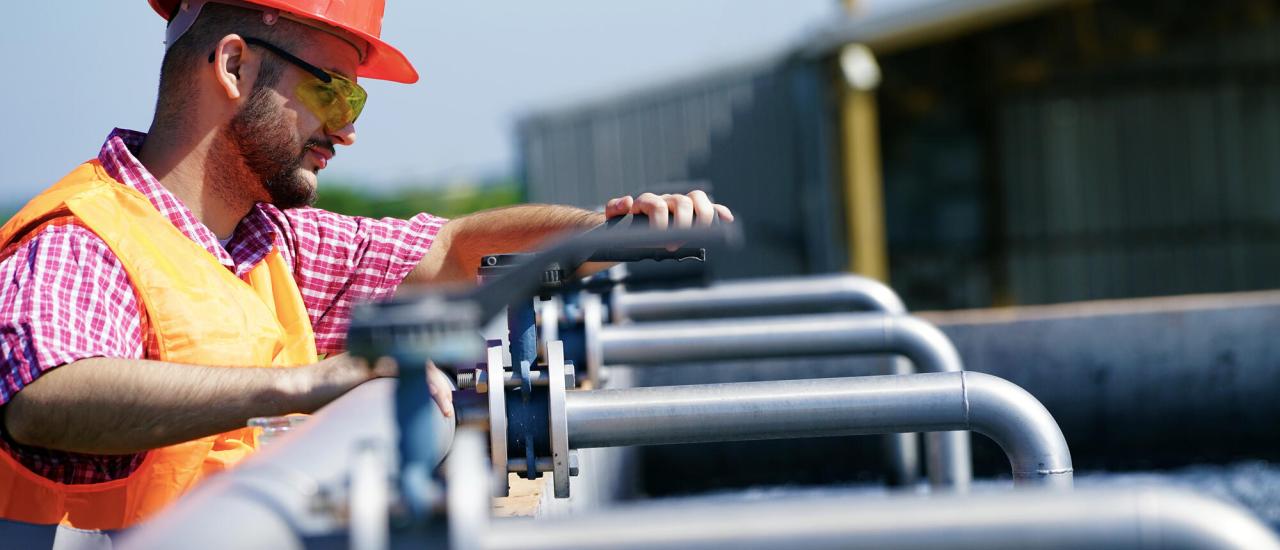
Faced with production stoppages and supply problems, how do you keep producing when water is scarce? The health and food crisis caused by water scarcity, which is a direct consequence of climate change, could well become an industrial crisis in the very near future! Faced with these threats, industry needs to reinvent itself and adapt. Innovating to consume less water in a better way is no longer just an ambition, it is a necessity. So how can industry, the world’s second-largest consumer of water after farming, acclimatize to the disappearance of this essential resource?
Industry, a drop in the ocean?
Consuming 20% of the world’s resources, industry has a far from negligible footprint. But without water, some manufacturing would simply grind to a halt. To produce one cubic meter of concrete, it takes approximately 150 to 200 liters of water! And when you consider that 190 m3 of concrete is poured every second around the world, you realize that the amount of water consumed by the construction sector alone is quite simply colossal. Because we use water at every stage: “Water is essential for the production and use of building materials, but also for the operation of plants: cleaning, cooling, etc.,” explains Élodie Fenayon, Saint-Gobain’s Environment and Circular Economy Director.
Building sustainably means consuming less water
The interdependence of our industrial systems adds another dimension to the challenge, given that water is also at the heart of our energy production! For power plant cooling in particular. Without water, all generation of electricity would be compromised. A domino effect would follow, affecting all sectors from industry to the home. This energy vulnerability further complicates the equation.
Real threats need real adaptation
Faced with these challenges, Saint-Gobain is taking up the water challenge with a clear goal: zero discharges by 2030 in areas of very high water stress (water stress is when demand for water exceeds available resources), and a 50% reduction in water withdrawals in all other regions of the world. This commitment is being reflected in practical action in the field.
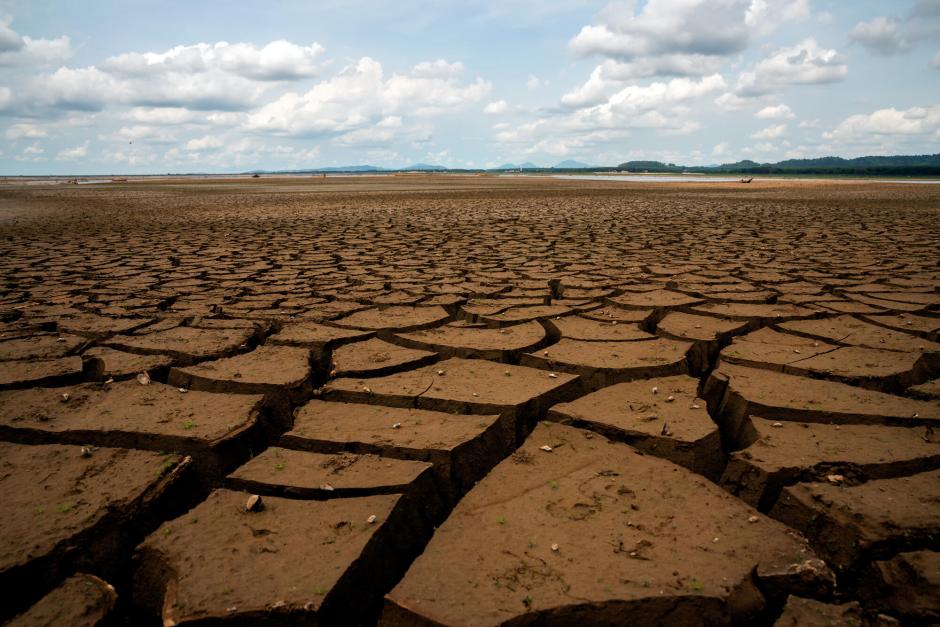
Take the Chantereine site in northern France, for example. According to climate projections, this temperate region will face high water stress by 2040. What are the consequences of this water stress for industry? More temporary production cutbacks, or even complete stoppages. To plan ahead for this critical situation, the Chantereine plant, which specializes in glass manufacture, carried out an in-depth study. The aim was to define which production lines could be slowed down or shut down completely, depending on the drought alert level and the 5, 10 or 15% reductions in water consumption that might be imposed. Such meticulous preparation means that decisions don’t have to be made at the last minute.
This seems simple on the surface. But can the same be done for all industrial processes? Some are more sensitive than others. In the same industry, a glass furnace can’t be turned on and off like a kettle. Even a temporary stoppage could solidify the molten glass and irreparably damage the furnace. So what’s the solution?
Adaptation solutions, but not without dilemmas
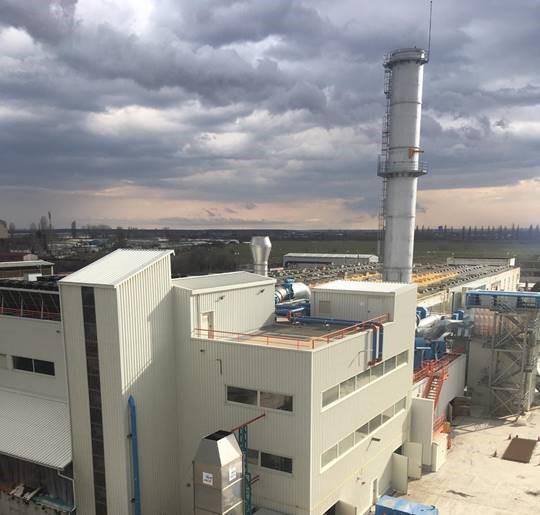
Some companies are tackling the problem from the beginning, choosing to optimize what already exists. Saint-Gobain’s Ploiesti site in Romania is a perfect example. Located in a region of high water stress, the glass wool plant has succeeded in reducing its water consumption by 52% by taking simple actions. How did they do it? Through the installation of metering equipment and a determined hunt for leaks, which represented 32,000 m³ of lost water between 2022 and 2023. And beyond these initial measures, which can easily be replicated on other sites, the plant has done even better: it has set up a system for reusing water from the binder dilution process. This saves up to 59,000 m³ of water a year!
The industry is also turning to predictive solutions. The start-up Leakmited, for example, uses AI to precisely identify areas at risk of leaks. This reduces the investigation area to just 20-30% of the network, on facilities that are sometimes several hundred kilometers long! The same approach could be adopted in factories, with smart monitoring systems capable of anticipating water consumption in real time, in the same way as we forecast the weather. It would be like having a high-tech plumber able to detect the slightest anomaly before it even occurs!
In Chennai, India, where water stress is particularly high, Saint-Gobain Glass and Sekurit plants have responded to requests from the authorities with solutions that are easier to implement. The plant roofs have been transformed into giant rainwater collectors. The plants thus operate in a closed circuit, meeting the government’s requirement to stop withdrawing groundwater. An urban forest benefits from this, and surplus monsoon water is even stored to supply the plants in the dry season. But what about the future of these initiatives, given that climate change will make rain a scarce commodity in India in 20 years?
Challenges and opportunities of sustainable construction in the Global South
And beware of side effects, warns Élodie Fenayon: “These projects need to be assessed on a case-by-case basis, as rainwater harvesting is sometimes bad for groundwater replenishment, which can lead to negative impacts on biodiversity and local ecosystems.” This illustrates the complexity of the solutions to be implemented and the need for a holistic approach to water management.
Reduced consumption: a collective challenge for a sustainable future
The water crisis thus represents a major challenge for industry, but also an opportunity to rethink our production and consumption models. When water is essential, we need to find ways of using less of it. Saint-Gobain is thus revising its production recipes and becoming a construction chemist. Saint-Gobain subsidiary Chryso has succeeded in this area, with additives that significantly reduce the amount of water needed to make concrete.
The reuse of treated wastewater is also emerging as a solution for the future. Veolia took a major step forward in 2023, inaugurating the first French wastewater reuse unit to produce drinking water in the Vendée region. Its technological approach produces 1.5 million m³ of drinking water during dry periods. While technology now makes it possible to transform wastewater into drinking water, it also opens up new prospects for industry. Through an industrial symbiosis approach, sectors such as the construction industry, which consumes large volumes of water for concreting and site cleaning, could take advantage of this reused water to produce materials like cement or renders, or for other industrial processes. Veolia also makes its expertise available to manufacturers, to adapt these solutions to their specific needs.
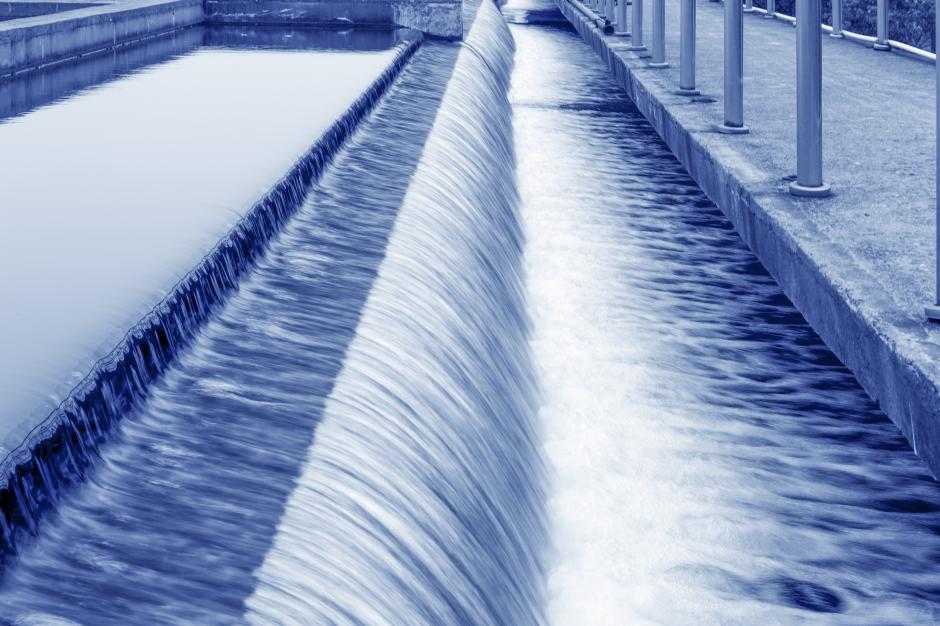
As encouraging as these initiatives are, one thing is certain: technology alone will not suffice. Raising the awareness of all stakeholders and getting them on board is crucial. As Élodie Fenayon observes: “Every drop counts. As individuals and professionals, we can all contribute to more responsible water management. Whether through informed consumption choices or innovation in our companies, we have the power to take action.”
The future of industry in the face of the water crisis is shaping up as a complex interplay between technological innovation, environmental awareness and collaboration. Every drop counts. It is only by pooling our efforts and adopting a global approach that we can meet the challenge of sustainable management of water, this precious resource essential to our survival and that of our planet.