
Will the materials of the future transform construction?
The construction sector faces major challenges: reducing its carbon footprint, conserving resources, improving the energy performance of buildings, and so on. To meet these challenges, innovation in materials is accelerating, driven by unprecedented collaboration between manufacturers, start-ups and research laboratories.
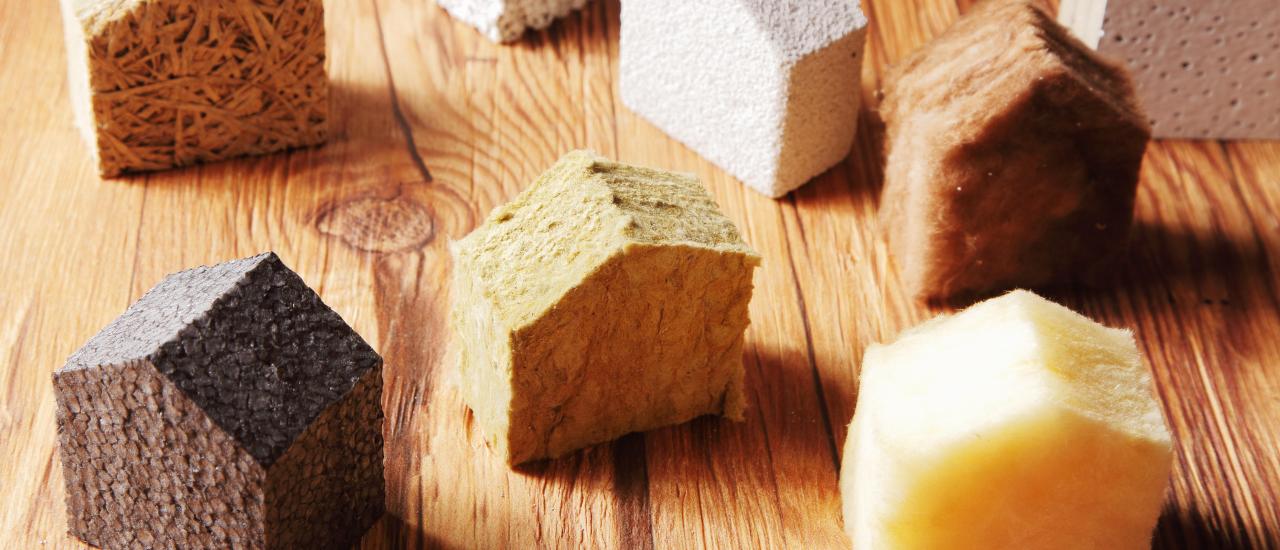
Innovation for greater sustainability is a central issue for many in the construction sector, with solutions such as concrete that captures CO2, bio-sourced insulation, and reinforced timber, just to name a few. But the way in which these solutions are developed is changing. Innovation should no longer be an end in itself; it must meet tangible market needs.
Close collaboration between manufacturers and start-ups can speed up the transition to more sustainable construction. Manufacturers bring their market knowledge and their testing and certification capabilities, while start-ups provide their agility and disruptive technologies. This synergy accelerates the development and adoption of new solutions.
“For everything to do with sustainability, the demand is already there,” confirms Michel Nasilowski, External Venturing Manager on the NOVA team. “Customers are on the lookout for alternative, lower-carbon products. But the implementation constraints must also be taken into account. Craftsmen are used to a certain way of working, and the change must not make life more difficult for them. Our role is to support this transition.”
New-generation concrete and cement
At a time when the sector is looking to reduce its carbon footprint, innovations in concrete – that emblematic building material – are springing up everywhere. Carbon capture and storage technologies are being developed, such as the Carbicrete solution in which carbon dioxide is captured directly within building components.
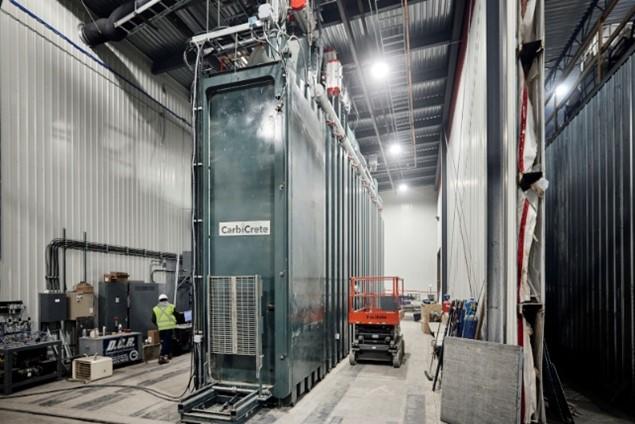
This innovative process replaces traditional cement with steel slag*, mixed with aggregate and water. The concrete mix is placed in a special curing chamber, where biogenic CO2 from ethanol fermentation is injected. In just 24 hours, the CO2 reacts with the slag to form stable calcium carbonates. The result of this reaction is a concrete with up to 30% greater compressive strength than conventional products, and better freeze-thaw resistance.
Sustainable concrete: from grey to "green"
Other start-ups, such as Fortera, are working on alternative low-carbon cements. Inspired by coral, which builds its skeleton by mineralizing CO2, this Silicon Valley company has developed an innovative process that captures the carbon emitted by cement plants and converts it into calcium carbonate. Unlike traditional cement, which requires the addition of silica and iron oxide, the Fortera method uses only limestone and recovered CO2, offering a greener solution for the cement industry.
There are even “self-healing” concretes, containing bacteria or enzymes. When cracks appear, these microorganisms mineralize on contact with air and water, naturally plugging the damaged area. A promising technology, although its adoption by the market remains to be seen.
When nature inspires the construction of tomorrow
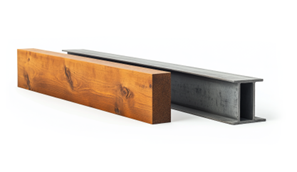
Some laboratories are pushing back the limits of traditional materials, such as the translucent wood developed at the KTH Royal Institute of Technology in Stockholm. This innovative material, obtained by replacing lignin with a transparent polymer, maintains the structure of the wood while letting natural light pass through it, as an alternative to glass. Other start-ups, such as InventWood, are working on processes that make wood stronger than steel, paving the way for high-rise timber-framed buildings.
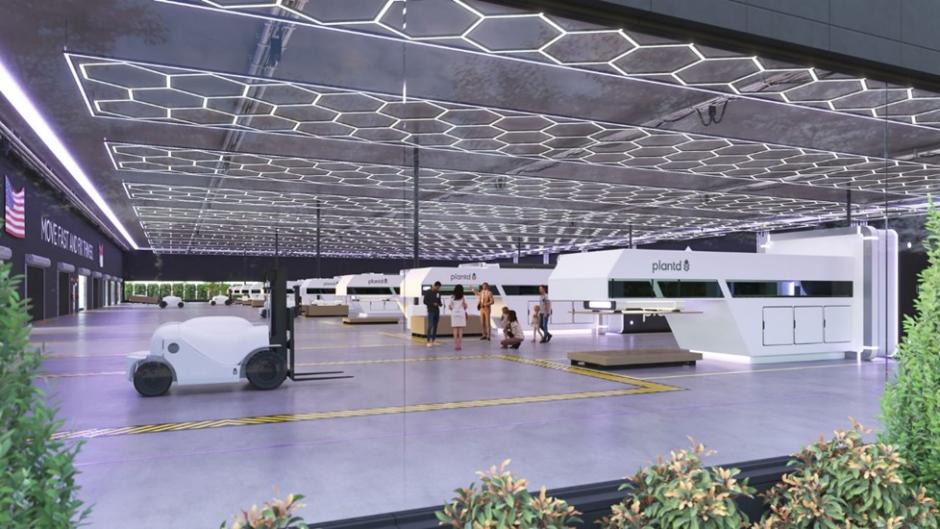
But wood is not the only avenue being explored. The start-up Plantd, for example, has developed a structural oriented strand board (OSB) model based on compressed grass fibers, providing better moisture resistance than conventional products. The use of natural resources has the advantage that it can be adapted to locally available resources: wheat waste in Europe, coconut fiber in Africa, etc. However, the difficulty lies within their fire classification, warns Michel Nasilowski. “Start-ups are more interested in the structural and mechanical aspects than in fire resistance. Here again, collaboration between manufacturers and start-ups has a role to play. We can contribute our expertise in fire resistance and help them develop their solutions with this in mind.”
Research sometimes leads to the exploration of surprising areas, and mushrooms’ mycelium is a good example. Its insulating properties, natural fire-resistance potential and ability to capture carbon make it a material of interest. However, as Daphné de La Grandière, External Venturing Manager, Head of Circular Economy Projects, at NOVA, points out: "For the time being, the performance of mycelium as an insulator is of interest, but limited by its sensitivity to humidity and its durability. Chemical or thermal treatments can improve these characteristics, but they also increase the ecological footprint. Its use as a component in composites, particularly as a natural binder, is a promising avenue that is still being explored.”
Optimizing materials for re-use
In addition to the materials themselves, innovation is also being applied to manufacturing and application processes. Artificial intelligence is playing an increasingly important role, in particular by optimizing formulations according to the raw materials available, often from re-use or local sources. This trend is set to accelerate, as Daphné de La Grandière points out: “As circularity becomes more widespread, we’re going to have to re-use more and more materials from a wide range of sources. AI makes it possible to adjust formulations to maintain consistent quality despite variability in the raw materials used.”
What if Generative AI could help us build more sustainably?
This determination to optimize existing resources through new processes can be found in other fields too. A case in point is excavated soil, the material extracted when preparing building sites. Using a patented process called flash calcination, start-up NeoCem transforms this “waste” into building components. After firing at 750°C for just a few seconds, compared with 1,450°C for over an hour for traditional cement, the result is a cement that emits up to ten times less CO2.
In the end, is it absolutely necessary to reinvent everything? The answer is no. The issue for materials innovation today is not so much to create new materials as to optimize existing ones and develop circularity. “Innovation should also focus on logistics, sorting and redistribution of materials,” notes Michel Nasilowski. “AI can help us optimize these flows and create true marketplaces for recycled materials.”
This pragmatic approach is a timely reminder that the most useful innovation is not always the most spectacular. While certain technologies, such as luminescent concrete or living façades incorporating algae cultures, are the stuff of dreams, the most impactful solutions are often those that optimize existing structures while responding to site and customer constraints.
* waste by-product generated during steel or iron production.