
When architecture fosters recovery
The first hospital in Latin America to be certified LEED Gold for Healthcare, Erastinho Hospital in Curitiba, Brazil, exemplifies how architecture can be designed to improve patients and healthcare professionals’ well-being. Saint-Gobain deployed a full range of solutions for its construction.
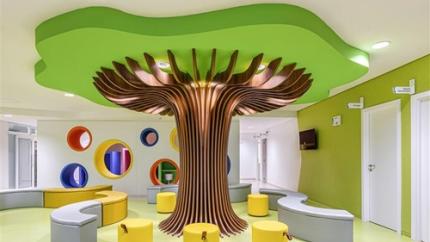
Noise control, air quality, thermal comfort... The hospital environment has a direct influence on patient recovery and the effectiveness of healthcare professionals. For the Erastinho hospital in Curitiba, Brazil, which specializes in pediatric oncology, this therapeutic approach translated into stringent technical requirements: transforming architecture into a tool to calm vulnerable young patients, eliminating noise stress from medical equipment and creating a healthcare setting with exemplary environmental credentials.
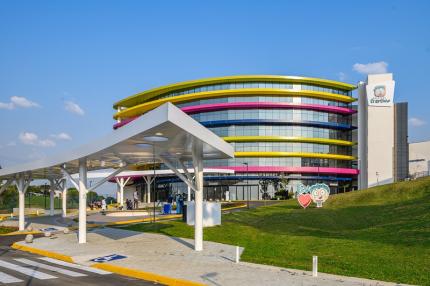
Making this 4,800 m² hospital a healing environment required perfectly orchestrated technical solutions, which Saint-Gobain found in its Brazilian brands.
Energy efficiency, for example, is based on Isover insulation and Placo® partitions fitted with Glasroc® X panels, specially developed for Brazilian climatic conditions. These lightweight panels can withstand high temperatures and humidity, while guaranteeing rapid installation for large-scale projects. For fire safety, Placo® Fireline Board was chosen. Acoustic comfort was ensured using Ecophon systems, Placo® Performa panels, Rigitone ceilings and Fiberwood tiles. Lastly, Saint-Gobain deployed Placo® Gyprex tiles in hygiene-critical areas, with their washable vinyl facing making them resistant to chemicals and easy to clean.
A systems approach to lower energy consumption
Erastinho is the first healthcare facility in Latin America to achieve LEED Gold certification, with top marks for innovation and exemplary energy performance (25% savings on consumption). One of the reasons for this success is the choice of Saint-Gobain solutions that provide technical performance while remaining environmentally friendly: the Rigitone ceilings, for example, incorporate recycled plaster from demolition sites, while the Fiberwood tiles are made from natural wood fibers. These sustainable materials contribute to the building’s energy efficiency while reducing its carbon footprint.