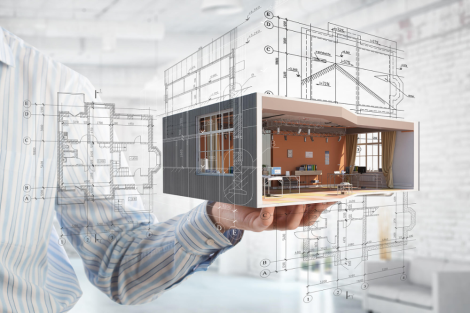
When innovation makes sustainable construction affordable
From light construction to artificial intelligence and new materials, how can innovation make building sustainable and affordable? We analyze the levers transforming the sector.
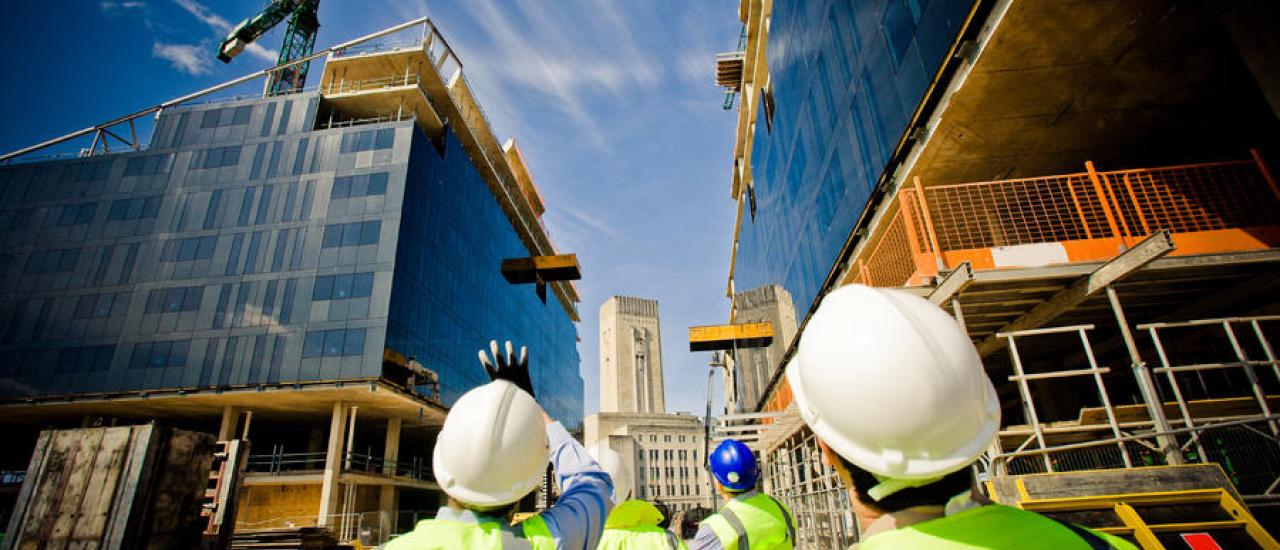
Throughout the world, innovations are transforming the economics of the building sector. On construction sites, in design offices and in production plants, every link in the value chain is being rethought to optimize ecological impact and economic profitability.
Construction methods that also lighten the cost
Light construction (see box below) is now established as the solution of the future throughout the world. In the UK, Germany and the Netherlands, it accounts for 50% of the market, and this figure rises to 75% in Sweden. Penetration is even more significant in the United States and Canada, where light construction accounts for 90% of projects.
This success is based on tangible benefits: by halving the use of materials compared with traditional methods, it combines reduced environmental impact with optimized costs. Solutions such as plasterboard and metal framing also provide considerable productivity gains, with construction times cut by up to 70%.
And this optimization of processes goes even further with off-site construction, i.e. prefabrication in the factory. “Time is money, and off-site construction has the immense advantage of being fast,” confirms Dennis Michaud, Managing Director, CertainTeed Offsite Solutions. “Whether it’s an individual house, an apartment block, a hotel or a hospital, off-site construction is 25% to 50% faster on average than traditional construction,” he adds. According to a study by McKinsey & Company, modular construction even reduces costs by 20%, representing potential annual savings of $22 billion worldwide.
Is building fast the same as building better ?
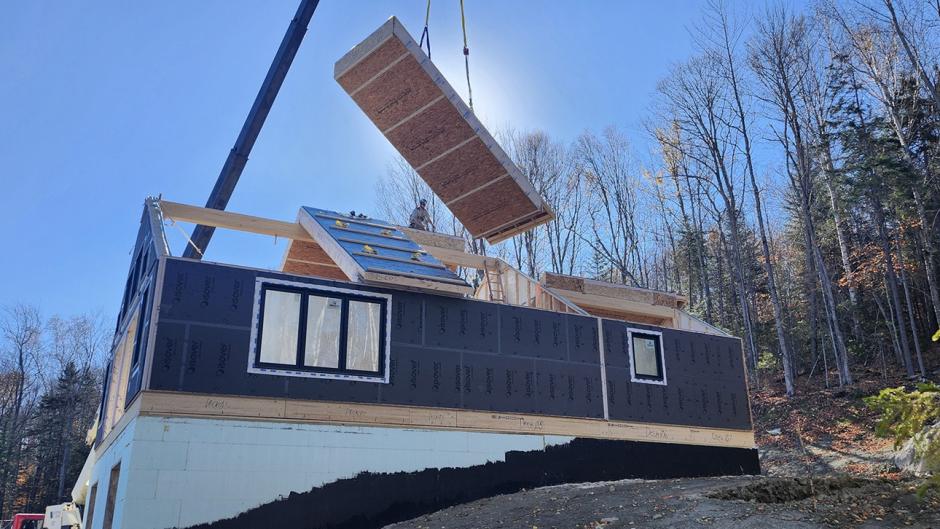
In the United States, the ONE Precision Assemblies system from CertainTeed considerably reduces project delivery times. Panels including windows, doors, cladding, roofing, insulation, weatherproofing and vapor barrier membranes, are manufactured in just one week. Once delivered to the site of a modular house, they can be installed in less than three weeks. For comparison, a similar project would take between three and five months using traditional construction methods.
Light construction and off-site construction: two complementary approaches
These construction methods are often confused. While they are actually quite different, they can be combined.
Light construction favors the use of materials such as metal, wood and plasterboard over concrete and traditional masonry. These components, generally assembled on site, considerably reduce the overall weight of the building, lightening the foundations and speeding up installation.
Off-site construction consists in prefabricating building components in a factory, then transporting and assembling them on site. This approach can be applied to single components (walls, floors) or complete 3D modules (hotel rooms, bathrooms). It can use light or traditional techniques, as required.
In practice, these two methods are often combined to maximize the benefits. Prefabricated modules with metal frames, for example, are easier to transport and assemble than those made of concrete. This synergy provides time savings of up to 70% and cost reductions of 20 to 25% compared with traditional methods.
Digital planning for improved efficiency
While new construction methods are revolutionizing on-site work, a large proportion of the savings can be made upstream. To keep costs under control while guaranteeing quality, the construction sector is now drawing inspiration from processes that are already tried and tested in industry.
Lean Construction, developed by the automotive industry, significantly reduces inefficiency in the sector. Currently, 60-70% of working time on a site does not directly generate value, due to various factors: finding materials, lead times, defects to be corrected, and lack of coordination between trades. By streamlining every stage of the project and involving all stakeholders right from the design stage, this approach eliminates wastage of time and materials. The Strasbourg university hospital project in France is a perfect illustration. Faced with increasing delays and budget overruns, the program team adopted a lean approach that led to a 30% reduction in lead times and a 25% reduction in costs.
Will the materials of the future transform construction ?
Digitization takes this optimization even further. Building Information Modeling (BIM) makes it possible to model, control and analyze every aspect of a project upstream. In particular, it offers the possibility of calculating material quantities very precisely. This results in substantial cost savings and less waste. A digital model and all the pre-industrialization tools can reduce the cost of a project by up to 20%. Hence, there are no unpleasant surprises on site and no last-minute adjustments. And incorporating sustainable solutions at an early stage in a project maximizes their impact while optimizing their cost.
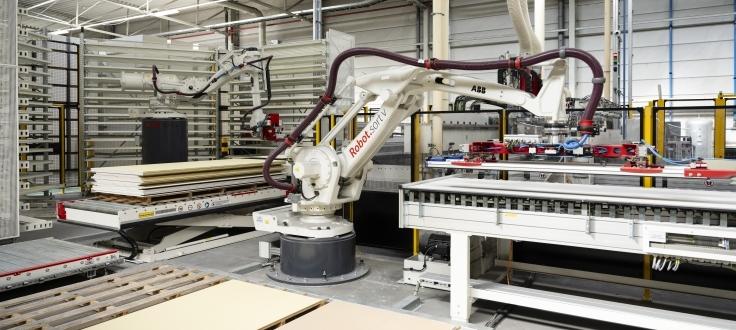
BIM also revolutionizes production circuits. The example of Gyproc in Belgium illustrates this synergy. Their plant uses a robotic cutting machine capable of reading BIM drawings directly and preparing customized kits for each project. No more on-site cutting or offcuts: contractors receive ready-to-install kits, numbered and arranged in order, saving up to 50% on installation time.
AI opens up new prospects
Generative design, based on artificial intelligence, also makes it easy to explore thousands of design solutions in just a few seconds to find the balance between performance and cost. The aim is to find the best combination of the different parameters. For example, a larger glazed surface area improves natural lighting, but can impact the budget both in terms of the initial purchase and ongoing energy costs. By analyzing all these factors simultaneously, generative design proposes optimal solutions that are often unattainable using traditional methods. The results are convincing: design time reduced by up to 30%, design conflicts cut by 75% and project delays reduced by 20%, as well as less wasted material and better resource management.
What if Generative AI could help us build mode sustainably ?
Innovation is thus transforming the economics of sustainable construction. The results are tangible: light construction cuts lead times by up to 70%, and modular construction reduces costs by 20%. Not to mention the substantial savings to be made in the future, particularly in terms of energy consumption, throughout the operational life of the building.
But technology isn’t everything. While it is a major lever for optimization, it must be combined with other approaches – choice of materials, circular economy, and life cycle thinking – to reveal its full potential. The question is no longer whether sustainable construction is profitable, but rather how to step up its deployment to combine environmental and economic performance.