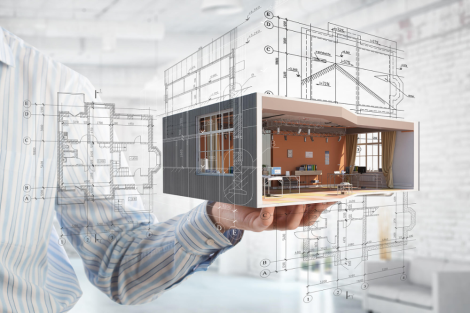
Infrastructure: solutions that are the key to success
Roads, bridges, tunnels, train stations, airports: all over the world, infrastructure projects are becoming more challenging. Saint-Gobain offers high-performance solutions and a unique capability: integrated solutions that combine decarbonization, durability, performance, and continuity of service.
For infrastructure builders, simply choosing the best products is no longer enough. They need to bring together traditionally separate areas of expertise to achieve overall performance. And this is where the full value of the Saint-Gobain approach comes into play: an integrated solutions strategy, deployed country by country, which simplifies project coordination and allows infrastructure stakeholders to focus on their core business.
Construction chemicals, driving decarbonization and productivity
On many large-scale infrastructure projects, environmental performance and adherence to deadlines hinge primarily on concrete. Its formulation, application and monitoring determine the structure’s carbon footprint, its durability, and the pace of construction. Now more than ever, concrete is a strategic lever, both for project owners facing increasing environmental requirements and for construction companies dealing with tight schedules.
With its admixtures, low-carbon cements, real-time digital monitoring of setting times, waterproofing for underground structures, and ready-to-use flooring solutions, construction chemicals offer a wealth of solutions and expertise that, when combined, turn carbon and scheduling constraints into operational performance.
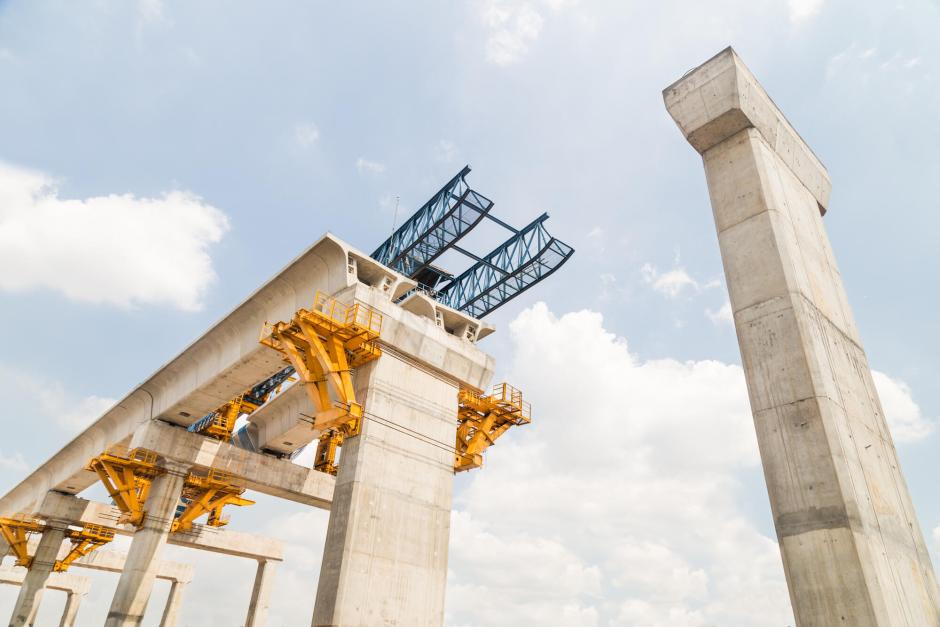
For example, the Grand Paris Express project in France includes 200 km of lines, 68 stations – and 7 million cubic meters of concrete! Société du Grand Paris has set a cap on greenhouse gas emissions for the concrete used in this project. As a result, 90% of the new metro is currently being built using low-carbon concrete, which has a carbon footprint 40% lower than that of conventional concrete. For the deep foundations, CEM III/C cement with reduced carbon footprint was combined with Chryso® Optima 1340 admixtures, which are capable of maintaining concrete workability for up to 10 hours.
Emissions scopes: three levers for decarbonizing industry
This combination of solutions successfully avoided nearly 100 kg of CO₂ emissions per cubic meter. But the Group’s added value doesn’t stop there. In parallel, the Maturix connected monitoring solution secures formwork removal phases without waiting for laboratory testing. Weberfloor 4320 self-smoothing screed makes it possible to pour 20 tons in 2 hours, compared with 8 days for manual application Each solution plays its part here, but it is their coordination that creates true value for the customer: a chain of expertise that simultaneously addresses the project’s carbon, technical, and operational challenges.
Structures that draw on the full spectrum of expertise
The more complex an infrastructure project is, the greater the need for the convergence of expertise. A modern airport hub, for example, must combine runway performance, roof waterproofing, solar control façades, terminal acoustics, structural fire safety, and the durability of finishings. These are specialties that project owners and engineering firms usually have to source across multiple suppliers.
The integrated solutions approach specifically aims to simplify this equation. For a given structure, these areas of expertise connect early on, bridging the gap between design and construction, as well as between different technical fields. This integration reduces risks at the interfaces between different work packages, secures implementation, and guarantees overall consistency.
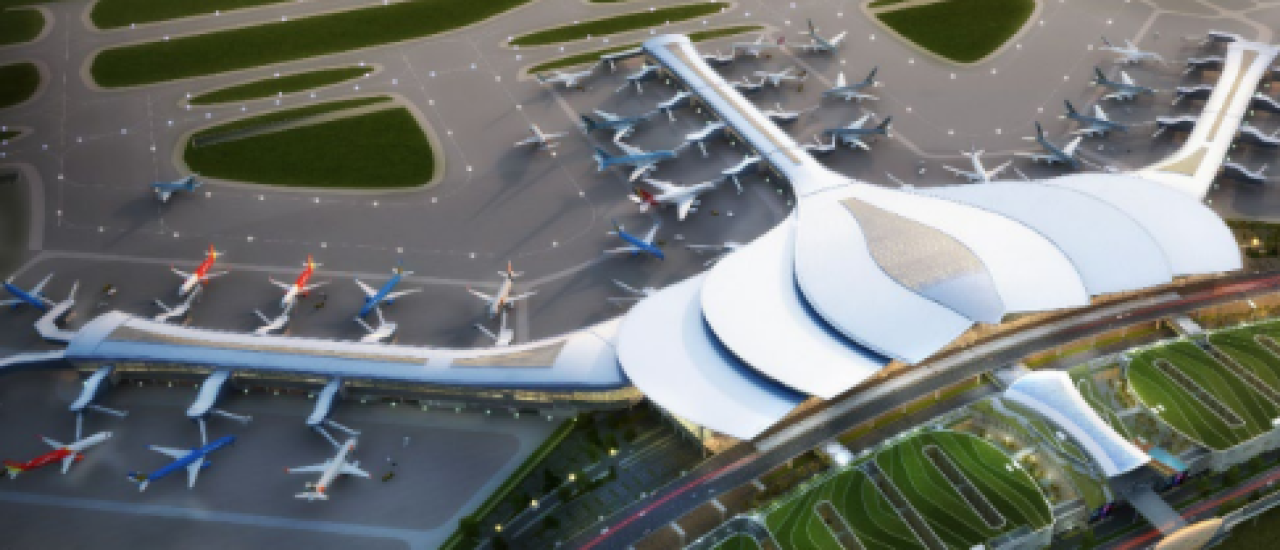
In Vietnam, Long Thành International Airport has been designed to ultimately accommodate 100 million passengers and 5 million tons of cargo per year. And the project draws on six families of Saint-Gobain expertise: high-performance glazing, waterproofing and roofing, construction chemicals for runways and tunnels, structural reinforcement for aprons, fire protection, and finishing and terminal acoustics. Six families of expertise, but a single industrial partner, which simplifies specification and implementation on a project of this scale.
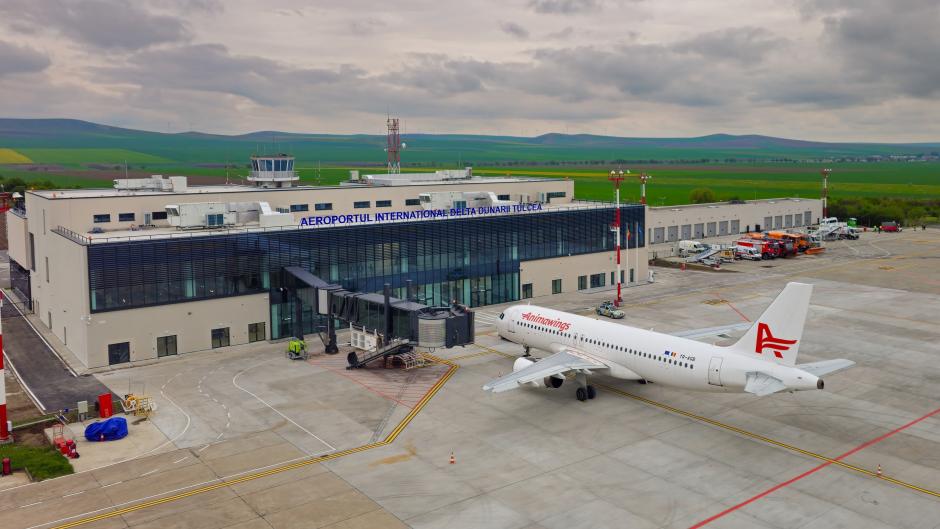
A different configuration brings different challenges. At Tulcea Airport in the Danube Delta (Romania), the goal was to modernize and expand an existing terminal to accommodate growing passenger traffic. Eleven Saint-Gobain solutions were deployed there: partitions, insulation, glazing, acoustic ceilings, façades, and construction chemicals. This demonstrates that renovating existing infrastructure requires the same integration of expertise as new build projects.
Country-based organization to deliver local solutions
This approach to integration would not work without its natural corollary: proximity. A solutions-based approach only makes sense if it is tailored to the local context: regulations, climate, know-how, and supply chains. To this end, Saint-Gobain relies on an organizational model structured around country platforms. This ability to deliver a comprehensive, local response constitutes a major differentiating asset, for both new build and renovation.
How can we build sustainable infrastructure for the digital world?
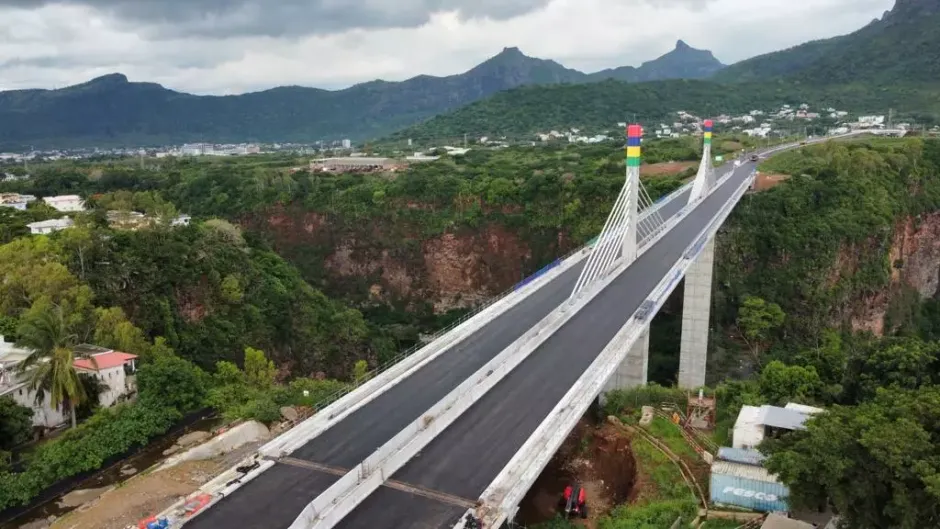
Next stop, the Indian Ocean. The Sir Anerood Jugnauth Bridge in Mauritius demonstrates the same adaptability in a radically different environment: a tropical climate, an island setting, and demanding durability constraints for a 330-meter structure. The local teams utilized Chryso® admixtures, but the differentiation lies in more than just the technical quality of the products. Above all, it is the selection, combination, and application of these solutions that makes the Saint-Gobain proposition a unique offer, delivered by teams with deep roots in the region.
Today, infrastructure is the focal point for the greatest challenges in construction: large-scale decarbonization, durability in demanding environments, operational performance for millions of users, and the ability to renovate without disrupting operations. Meeting these challenges requires moving beyond a product supply mindset and adopting an orchestration approach.
Adapting infrastructure to the climate has become vital
This is the approach that Saint-Gobain supports, through an integrated solutions approach deployed country by country. An approach that serves today as a key lever for industry stakeholders – project owners, engineering firms, and contractors – faced with the necessity of building, and transforming, infrastructure capable of meeting the challenges of our century.